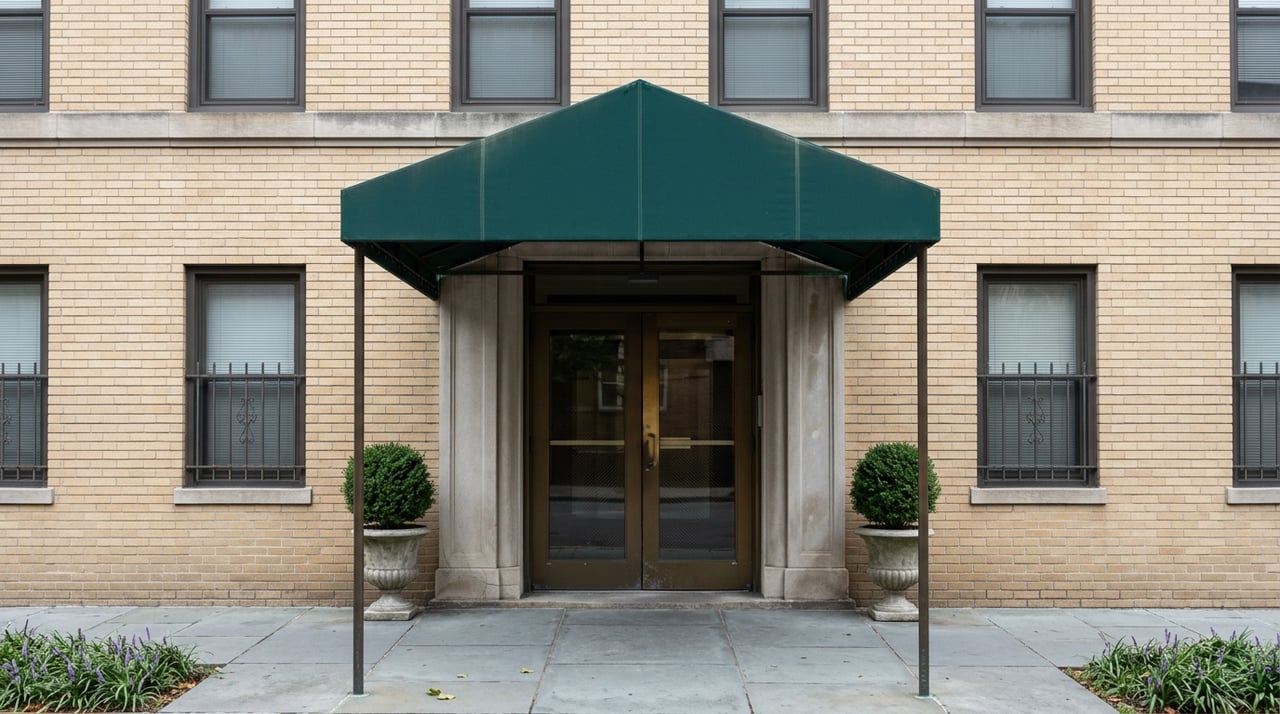
The Brooklyn Co-op Board Test Built for a Paycheck, Not a Retirement Account
A downsizing retiree with a paid-off house and a comfortable nest egg looks, on paper, like the safest buyer a Brooklyn co-op board could hope for. In practice, that same buyer can be harder to approve than a thirty-four-year-old with two incomes, a car loan, and a fraction of the retiree's net worth. The reason has nothing to do with price and everything to do with how a co-op board's financial test is built.
Most Brooklyn co-op boards run two separate checks on a buyer: a debt-to-income ratio, and a post-closing liquidity requirement that asks how much cash and marketable securities the buyer will have left after the down payment and closing costs are paid. That second test is where the trouble starts for a retiree, because boards routinely discount or exclude retirement accounts from the count. A 401(k) or an IRA might represent decades of disciplined saving and be fully accessible to someone past 59 and a half, but to a co-op board it often reads as something closer to real estate equity: valuable, real, and not what they mean by "liquid."
Take a straightforward example. A one-million-dollar Brooklyn co-op purchase with 20 percent down leaves an $800,000 loan. At a 6.5 percent rate over 30 years, that mortgage runs close to $5,050 a month. Add a maintenance charge of $1,800, a fairly ordinary figure for a prewar building, and the monthly carrying cost lands near $6,850.
A board asking for two years of that carrying cost in liquid reserves, which is a common standard across brownstone Brooklyn, wants to see roughly $165,000 sitting in cash or brokerage accounts after closing. Stricter buildings, especially older prewar co-ops in Park Slope, Brooklyn Heights, or Fort Greene, sometimes push that to three years or ask for reserves layered on top of a larger down payment, which can push the total liquid-asset bar toward $390,000 on the same million-dollar purchase.
None of that math changes based on how the buyer earns a living. It changes based on where the buyer's money happens to sit.
Boards generally sort a buyer's assets into two piles. Checking and savings accounts, money-market funds, and publicly traded stocks or bonds count in full because they can be converted to cash in a day or two. Retirement accounts, real estate equity, restricted trusts, and business interests tend to land in the second pile: assets that are real, but discounted anywhere from 50 percent to nothing at all, because the board's underlying worry is how fast a shareholder can raise cash in an emergency without penalty.
For a working buyer, this rarely matters much. Their liquid reserves are usually cash saved from a paycheck, and their retirement account is a separate, smaller line item that isn't doing much work in the application either way. For a retiree who spent a career maxing out a 401(k) instead of building a large separate brokerage account, the exact opposite is true. The asset that represents most of their net worth is the one the spreadsheet trusts least.
One Manhattan-based broker has described advising a California retiree who arrived with two million dollars in cash and a mortgage-free home, looking to pay all cash for an $800,000 Brooklyn one-bedroom. Even that buyer ran into resistance, because after paying cash the board wanted to see a level of remaining liquid reserve that the underlying math, built around income-producing assets rather than a lump sum, simply wasn't designed to reward. A retiree paying cash and holding the remainder in a diversified portfolio can look, on a board's worksheet, thinner than a much less wealthy couple with steady salaries and a smaller savings account.
Retirees weighing how to finance a move often look at a reverse mortgage as a way to convert home equity into cash without selling outright or drawing down retirement accounts. In 2026, the FHA's home equity conversion mortgage program caps its maximum claim amount at $1,249,125. That's a meaningful tool for a retiree buying a condo or a brownstone in Brooklyn, where home values often fall under that cap.
It is not available at all for a co-op purchase. Standard FHA-insured reverse mortgages cannot be used on cooperative shares, since the buyer would be purchasing stock in a corporation rather than a deeded property, and the program's structure doesn't recognize that form of ownership. A condo or a brownstone keeps this financing path open. A co-op closes it entirely, regardless of the shareholder's age or equity position.
That single distinction reshapes the decision for a retiree comparing property types at a similar price point. The co-op that looks like the cheaper entry into a neighborhood can be the one option that removes a financing tool the other two still allow.
The price gap between a co-op and a brownstone in the same Brooklyn neighborhood is often exactly what it looks like on the surface, and sometimes it isn't. In Park Slope, one-bedroom co-ops start around $450,000 while single-family brownstones run from $2.5 million into the $5 million range, a real and predictable gap. In Carroll Gardens, though, a recent snapshot showed a two-bedroom condo and a two-bedroom co-op selling within roughly $25,000 of each other, which means the co-op "discount" that buyers expect to find isn't guaranteed just because a building is a cooperative rather than a condominium.
Flip taxes add another layer that only applies to co-ops. Brooklyn co-op sellers typically pay a building transfer fee of 1 to 2.5 percent of the sale price, on top of the 8 to 10 percent of sale price that most NYC sellers budget for commissions, transfer taxes, and attorney fees. A retiree who bought into a Brooklyn co-op decades ago and is now selling to downsize further will want that flip tax in the math from the start, since it comes directly out of proceeds and isn't something a condo or brownstone seller typically pays at all.
Brooklyn's own co-op pricing has softened slightly as this friction has become more visible. Co-op prices slipped about 1.3 percent year over year through the first quarter of 2026, and several prewar buildings along the Park Slope and Brooklyn Heights border sat through the quarter before trimming asking prices 5 to 8 percent. Buyer caution about board approval and post-purchase liquidity requirements is a documented part of that story, not just financing costs or rates.
For a retiree weighing a co-op against a condo or a brownstone in Brooklyn, price per square foot is only part of the comparison. A few things worth working through before making an offer:
None of this means a co-op is off the table. Plenty of retirees clear these boards every year, often by leaning on a bank or brokerage relationship that can document deep, patient reserves. It does mean the comparison between a co-op, a condo, and a brownstone needs to account for how each one treats the specific shape of a retiree's money, not just the sale price on the listing sheet.
Does a co-op board have to explain why it rejected a buyer? No. Co-op boards can decline an application without giving a reason, and that discretion is one of the defining differences between a co-op and a condo purchase in New York City.
Can an adult child guarantee or co-purchase to solve a liquidity shortfall? Some buildings allow a guarantor or co-purchaser, often a family member, to strengthen a marginal application. Many prewar and higher-end co-ops don't, so this is worth confirming with the specific building before assuming it's an option.
Are all Brooklyn co-ops this strict about retirement accounts? No. Requirements vary building by building, and some smaller or newer conversions take a more holistic view of a buyer's overall financial picture. The only way to know is to ask the listing agent or managing agent for that building's actual standard before making an offer.
Every one of these numbers changes depending on the building, the block, and the buyer's full financial picture, which is exactly why this kind of planning benefits from a second set of eyes before an offer goes in. Binnie Sen has spent more than two decades in Brooklyn real estate and works specifically with retirees and their families through exactly this kind of transition, from reading a building's real liquidity standard to weighing a co-op against a condo or brownstone with the full math in view. Let's Talk About Your Next Move.
Stay up to date on the latest real estate trends.


Navigate your next chapter with confidence. Whether you're downsizing, rightsizing, or helping a loved one transition, Binnie provides patient guidance, trusted expertise, and personalized support every step of the way.