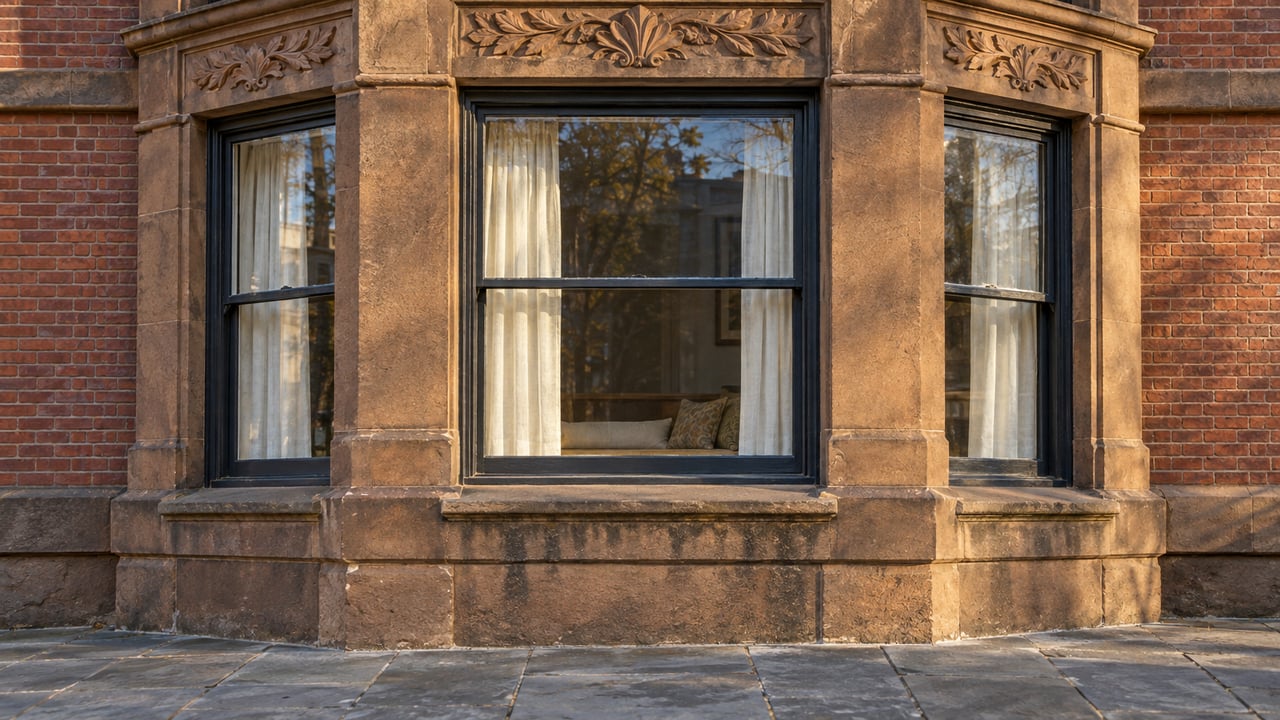
The Frick's Siena Bronzes Opened in October. The Show Isn't Finished Until November 22.
"Between 1450 and 1500, almost nowhere in Italy did local artistic traditions rely so heavily on a single medium as Siena's did on bronze." That's Giulio Dalvit, associate curator at the Frick Collection, in the museum's announcement of Siena: The Art of Bronze, 1450–1500. The show opened at 1 East 70th Street on October 15 and runs through January 18, 2027.
That gives it three months, and most people will treat it like any other exhibition: they'll go once, probably on a quiet weekday. The Frick has scheduled the show so that a single visit in October gets you half of it. The bronzes are on view now. The sound of fifteenth-century Siena arrives on two November weekends, ending November 22. The same few weeks happen to be when much of Museum Mile's fall calendar opens within walking distance.
People who went to the Met two seasons ago have seen part of this story already. In 2024–25 the Met and the National Gallery in London staged Siena: The Rise of Painting, 1300–1350. That show presented Siena the way it's usually presented, as a city of fourteenth-century painting.
The Frick picks up a century later and moves to a different medium. Dalvit names the Met show directly and calls the new exhibition "long-overdue attention to Sienese bronze sculpture." Apollo's preview says the Frick is keeping the Tuscan city at the center of art lovers' attention by turning to sculptors working a century after the painters.
Tessa Solomon's roundup in ARTnews frames it more bluntly. In most accounts of the Renaissance, she writes, "Florence tends to hog the spotlight." This show argues that Siena, about 30 miles south, was a center of ingenuity in its own right.
The loans explain why the show is a big deal. It brings together nearly forty statues, reliefs, candelabra and medals. According to the Frick, many of them have never been shown outside Tuscany, let alone in the United States. Italian lenders include the Museo Nazionale del Bargello in Florence, the Museo Nazionale di Capodimonte in Naples, the Galleria Nazionale dell'Umbria in Perugia, the Museo Diocesano Albani in Urbino and Siena's own Museo Civico. Pieces also come from the National Gallery of Art in Washington, the British Museum, the Victoria and Albert Museum, and collections in Berlin, Dresden and Vienna.
Apollo describes the show as three rooms, and one of them belongs to Donatello. He spent five years in Siena, and Apollo reports that widespread anti-Florentine feeling meant he didn't produce a single sculpture there. The piece representing him is a tomb slab he made for a local bishop, cast before he arrived. The exhibition uses it to show his command of illusionism and the influence he had on Sienese sculptors anyway.
The Donatello room carries the show's argument in miniature. The Frick's press materials describe Siena after its defeat by Florence in the 1550s. The city "stood in its rival city's political and cultural shadow" and was framed as a relic of the medieval past. Dalvit's exhibition sets out to undo that, and it does so with objects that were caught up in the rivalry as it happened.
Two Hercules figures are worth finding:
The Frick's own description runs from "small-scale jewel-like works" to "breathtakingly ambitious life-size statues." The medals and candelabra make up the jewel-like end of that range, so leave time for the cases as well as the big figures.
When the Frick announced its 2026–27 concert season, it said the Siena show would inspire "two weekends of programming in November." These are also the museum's first-ever pop-up performances in the Garden Court, and they're free with museum admission.
The same announcement describes the pairing this way:
"Like the exquisite bronzes on view in the show, this music poses a question of survival: while sculpture endures as matter, music endures only through copy, loss, and dispersal."
The first weekend brings early-music specialists Jasper Snow on vielle, Georgia Burashko, alto, Joshua Cheatham on viol and Richard Pittsinger, tenor. Very little notated polyphony from fifteenth-century Siena survives, and almost none of it can be tied to a local composer. Their program gathers pieces preserved in or near Sienese sources, several of them recovered from reused parchment, alongside works by Antonio da Cividale, Johannes Ciconia and Zacara da Teramo.
The second weekend belongs to Graindelavoix, the Antwerp-based ensemble led by Björn Schmelzer. At the center of their program is Sena vetus by the Franco-Flemish composer Arnolfo Giliardi, the only known fifteenth-century ceremonial motet written in honor of Siena. Around it they'll sing laments, Marian hymns and devotional songs by Du Fay, Ockeghem, Josquin, Isaac and Agricola. These were the northern singers who crossed the Alps and sang in Siena's cathedral.
The Frick says the Garden Court sets are meant to carry the music "into the garden's surrounding galleries as an experiential extension of the exhibition itself." That makes a pop-up afternoon in November a different visit from a quiet weekday morning in October.
The Frick isn't the only museum with a lot happening in November. Several institutions north along Fifth Avenue have openings and closings in the same weeks, so the Siena weekends sit inside a busy stretch of the neighborhood's calendar.
| Date | What happens | Where |
|---|---|---|
| Now through March 14, 2027 | Taryn Simon, opened September 18 | Guggenheim |
| Now through February 7, 2027 | Fragments of Memory, opened September 18 | Jewish Museum |
| October 30 | Frederic Church in Jamaica opens | Cooper Hewitt |
| November 6 | Gingerbread NYC: The Great Borough Bake-Off opens | Museum of the City of New York |
| November 14 and 15 | The Music of Siena, first weekend | Frick Collection |
| November 15 | Octopus & Others: Acts of Collaboration & Poetics closes | El Museo del Barrio |
| November 20 | The Photography Triennial: After Dark opens | Museum of the City of New York |
| November 22 | The Music of Siena, Graindelavoix | Frick Collection |
The Cooper Hewitt show is the closest match for anyone drawn to the Frick's focus on craft and process. It centers on rarely exhibited sketches from Frederic Church's 1865 travels in Jamaica, close observational studies of the island's plants and landscapes. It also marks the 200th anniversary of Church's birth, and it draws on the museum's holdings of more than 2,000 of his oil and graphite sketches, the largest collection of Church's work in the world.
The Museum of the City of New York's Halumii Ktapihna: Lenape Legacies and Futures has been open since September 25. To the south, ARTnews lists Asia Society's Buddha and Shiva, Lotus and Dragon: Celebrating 70 Years of Asia Society and the Rockefeller Legacy as running through January 3, 2027.
Hours, prices and concert details come from the Frick's current pages and can change, so check frick.org/visit before you head over.
If November afternoons on Fifth Avenue are part of how you picture the next few years, and you're weighing whether your current home still fits that picture, or helping a parent think it through, Binnie Sen is glad to talk it over, patiently and without pressure. Let's Talk About Your Next Move.
Stay up to date on the latest real estate trends.
Navigate your next chapter with confidence. Whether you're downsizing, rightsizing, or helping a loved one transition, Binnie provides patient guidance, trusted expertise, and personalized support every step of the way.