The Two Weeks When Douglaston Runs on Two Clocks Instead of One
Walk down West Drive on a Saturday morning in mid-September and you will pass someone in a windbreaker heading toward the Douglaston Yacht Squadron's pier, gear bag over one shoulder, timing the tide before the boating season winds down for good. Cut over toward Northern Boulevard the same morning and you will pass a different kind of gear bag, a kid's backpack with a water bottle clipped to the side, headed the opposite direction toward Alley Pond Environmental Center. Both people are doing something seasonal. Neither is doing the same season.
That overlap is not an accident of the calendar. It is the actual shape of fall in Douglaston, a neighborhood built where a tidal bay meets one of Queens's largest wooded parks, and for two weeks each September the neighborhood runs on both clocks at once before the water clock quietly stops.
Most people think of fall programming as something that starts when fall starts. Alley Pond Environmental Center does not work that way. The nonprofit, based at 229-10 Northern Boulevard on the edge of Alley Pond Park, opened registration for its Fall 2026 homeschool series on Monday, August 17, at 10 a.m., weeks before the first cool morning. By the time anyone in Douglaston noticed the maples starting to turn, the registration window had already been open for weeks.
The series itself runs on Mondays from 1:30 to 3 p.m., with sessions on October 19, 26, November 2, 9, 16, and 30, then December 7 and 14, for $200 per student. The stated focus this fall is climate change, pollution, and conservation, with a different environmental figure highlighted each week alongside stories, an outdoor walk, and time with the center's resident animals. It is a deliberately small program. Space is limited, and APEC has said as much on its own registration page.
That is only the scheduled portion. APEC's regular hours run Monday through Friday, 9 a.m. to 4:30 p.m., and Saturday and Sunday from 11 a.m. to 1 p.m., and the center fills those hours with guided nature walks, open houses where visitors can meet the birds and rabbits kept on site, and the occasional clothing or toy swap that turns into an informal neighborhood gathering. None of it requires eight Mondays of commitment. Most of it requires showing up.
The point is not that Douglaston has a nature center. Plenty of neighborhoods do. The point is that this one runs on an academic year's worth of structure tucked inside a park most residents already walk through, which means the woods side of Douglaston's fall already had a schedule before Labor Day.
While that registration window was open in August, the water side of the neighborhood was still running its own, older calendar, one that has nothing to do with a sign-up sheet.
The Douglaston Yacht Squadron anchors the Little Neck Bay waterfront with its own pier and marina, and its season follows the boats, not the school year. Regattas, block parties, and holiday gatherings are the events that structure a Douglaston summer into fall, organized around tides and weather rather than curriculum. A short walk from the marina sits the Douglaston Club, founded in 1917 and still housed in the neighborhood's converted Van Zandt mansion near West Drive and Church Street, a clubhouse that has served as the social center of this stretch of waterfront for more than a century.
These are not seasonal pop-ups. The Douglas Manor Association and the Douglaston Garden Club have kept civic and social life organized here for generations, and the pattern holds every year: as summer ends, the marina empties out gradually, boat by boat, in a way that has no fixed closing date the way APEC's registration link does. The water calendar just quietly runs down.
For a homeowner who has lived along Douglas Road or West Drive for twenty years, this rhythm barely registers as remarkable. It is simply what September looks like. But it is worth naming, because it explains why the neighborhood feels like it is holding two different seasons in the same two weeks.
Right now, in the back half of September, both clocks are still ticking, and that overlap is short. The Yacht Squadron's last regattas of the year are still on the water. APEC's Monday sessions have not started yet. A resident can walk the bay in the morning and the trails in the afternoon, and both will still feel like they belong to the current season.
That will not last. Once APEC's Monday program begins in earnest come October and settles into its eight-week run through mid-December, the marina will have mostly quieted for winter, boats hauled or moored for the season. The geography of Douglaston makes this transition almost literal rather than metaphorical. The neighborhood is bounded by Alley Pond Park to the west and Little Neck Bay to the north, so residents are not choosing between two abstract ideas of fall. They are choosing between two actual, walkable directions from their own front door, and for two weeks each year, both are open at once.
Anyone who has spent an October in Douglaston knows the handoff by feel: the marina goes still first, and the woods take over the season from there.
This is the part that is easy to miss if you have not lived through a full year here. The water calendar and the woods calendar are not simply parallel. One is built to end when the weather does, and the other is built to keep going regardless of it.
APEC's programming runs into December, well past the point where most boats have come out of the bay for the season, because a nature center's calendar is designed around what is happening on the trails, not what is happening on the water. Cold does not close down a guided walk through Alley Pond Park the way it closes down a marina. So the woods clock, once it starts, simply outlasts the water clock every single year, and by December the neighborhood has fully shifted its center of gravity from Little Neck Bay to the tree line along its western edge.
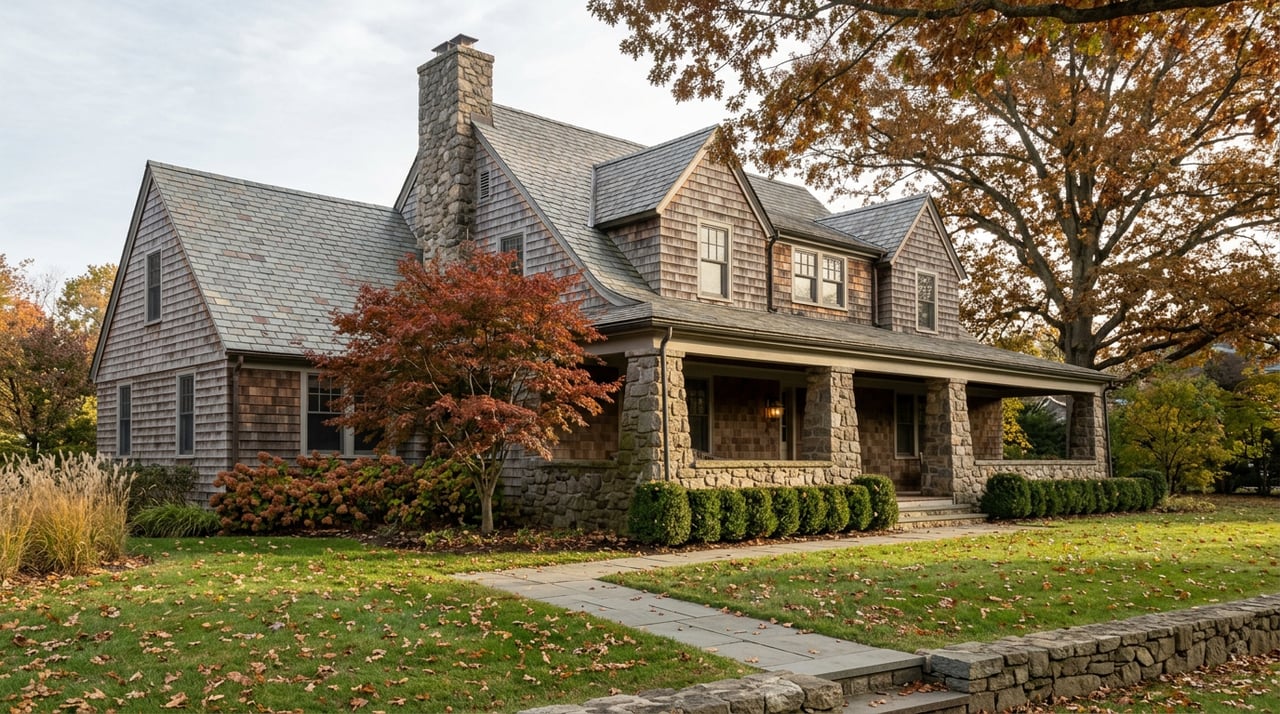
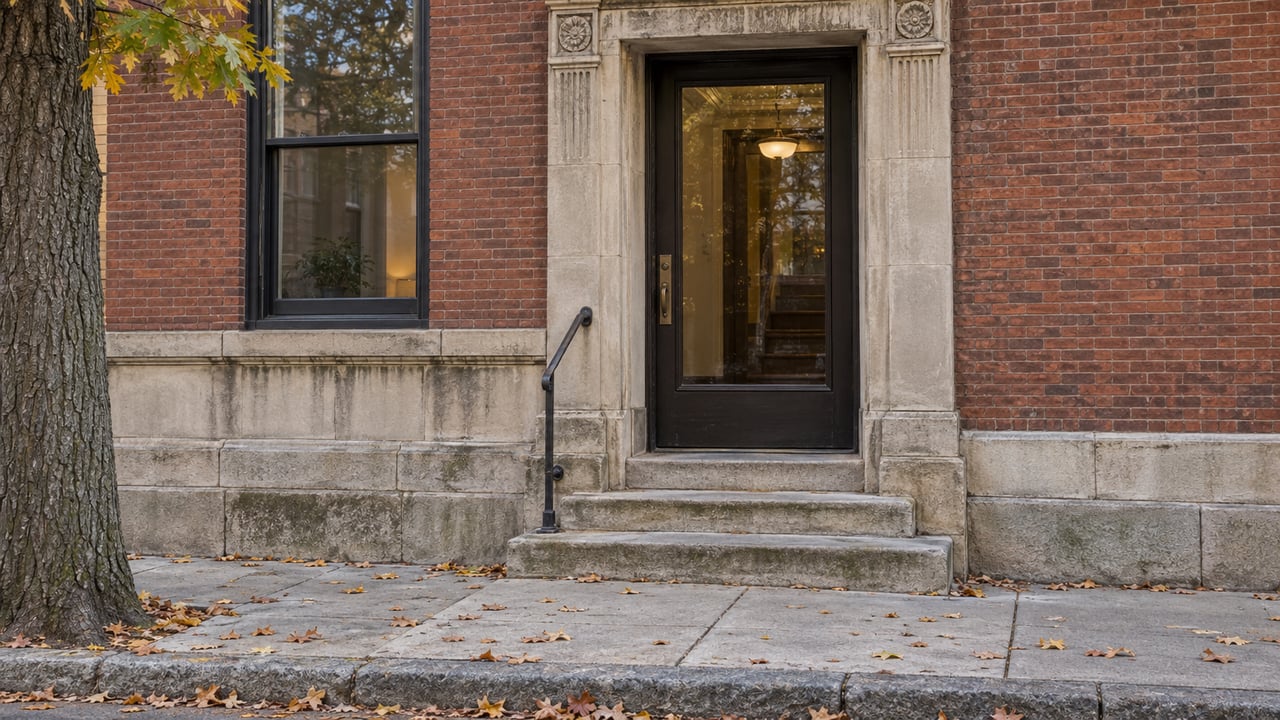
Homes here were largely built between 1890 and 1935, a mix of Colonial Revival, Tudor Revival, Mediterranean, and Arts and Crafts styles designed by architects working in an era when Douglaston was pitched as a country retreat reachable by the Long Island Rail Road's Douglaston Station, which opened in 1866. That history matters here because the neighborhood's whole layout, waterfront on one edge, parkland on the other, was set up before anyone had a reason to think about seasonal programming at all. The two-clock rhythm is not a modern addition. It is a direct consequence of a plan drawn up more than a century ago.
None of this requires a decision from anyone living here right now. The marina will empty out. The Monday sessions will fill their eight weeks. The trails near Udalls Cove will still be there for anyone who wants a quieter walk once both calendars have settled into their winter version. What makes Douglaston distinct in September is simply that, during these two weeks, a resident gets to watch both endings unfold side by side, one clock winding down while the other is just getting started.
If you are weighing a move in this part of Queens, or thinking about what a longtime Douglaston home might mean for the next chapter of your own life, Binnie Sen has spent years helping neighbors here think through those decisions with patience and a clear head. Let's Talk About Your Next Move.
Stay up to date on the latest real estate trends.



Navigate your next chapter with confidence. Whether you're downsizing, rightsizing, or helping a loved one transition, Binnie provides patient guidance, trusted expertise, and personalized support every step of the way.